Brand :
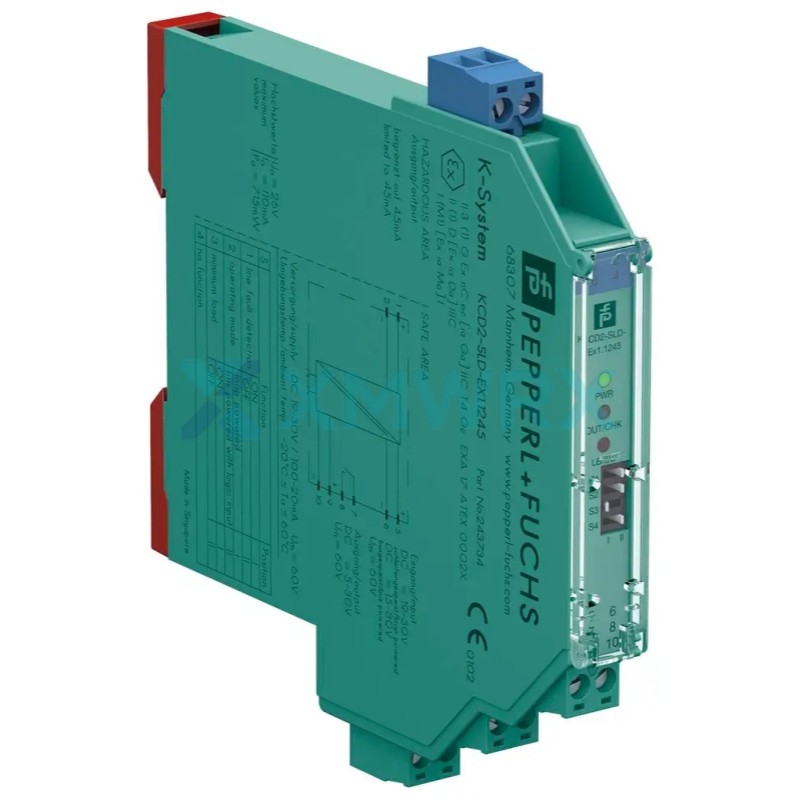
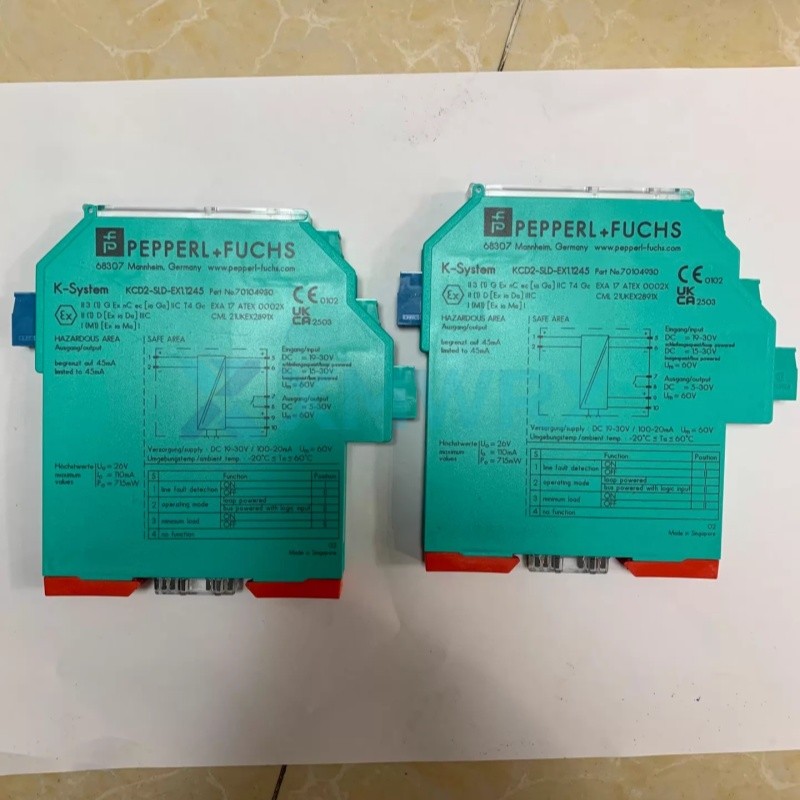
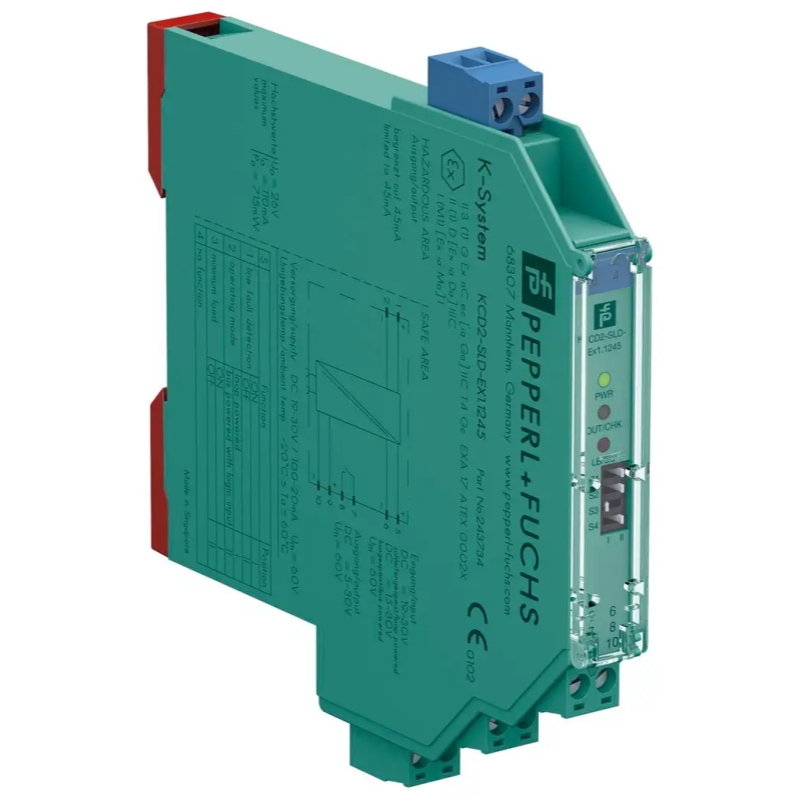
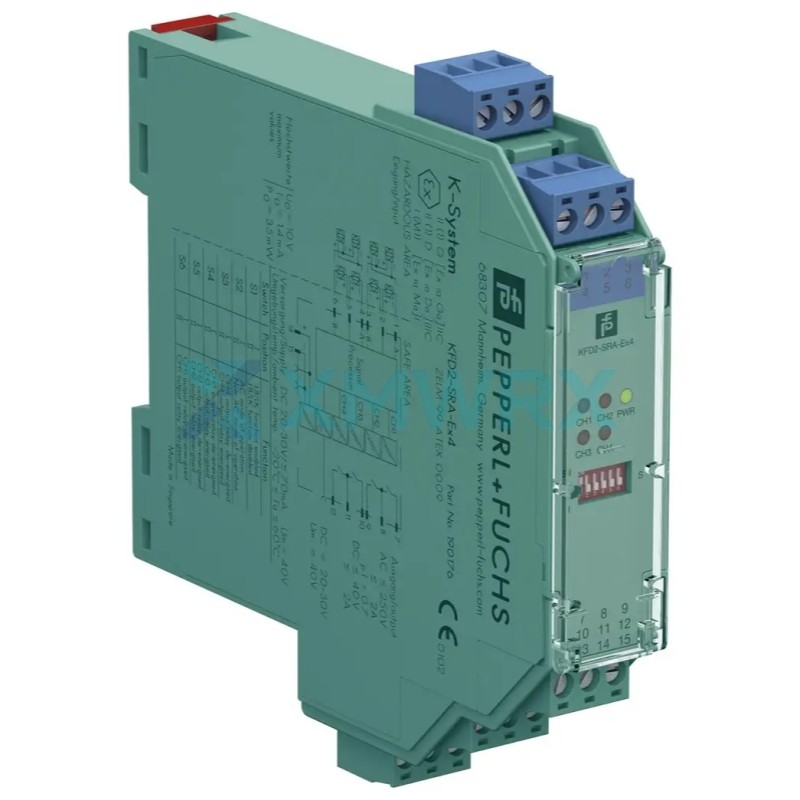
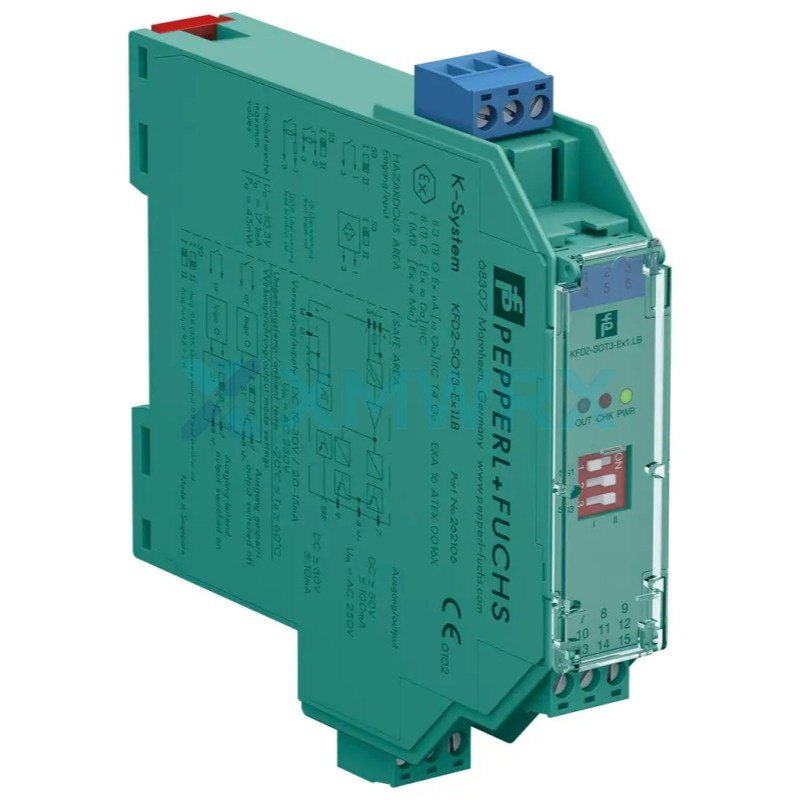
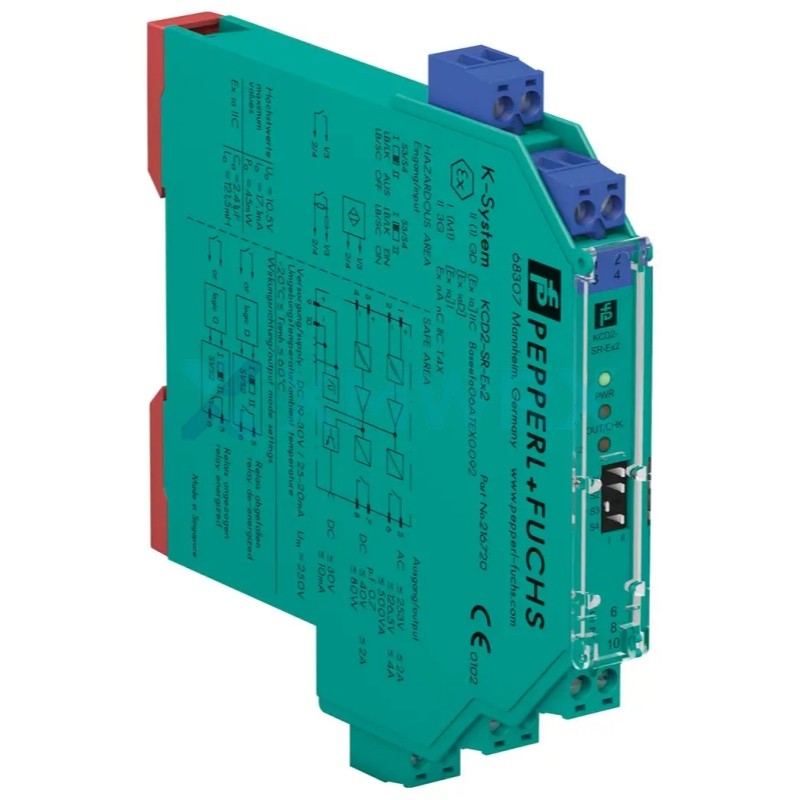
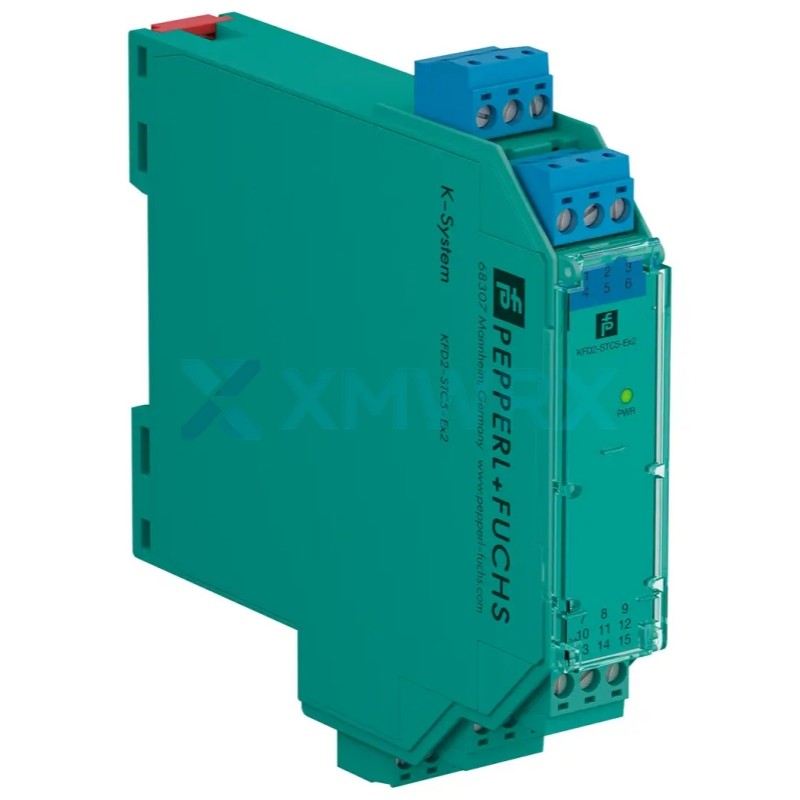
PEPPERL+FUCHSThe KCD2-SLD-Ex1.1245 is a 1-channel signal conditioner (relay module) launched by Pepperl+Fuchs.
It is mainly used in industrial automation systems, featuring high safety and reliable line fault detection capabilities.

| Brand | Pepperl+Fuchs |
| Model / Part Number | KCD2-SLD-Ex1.1245 |
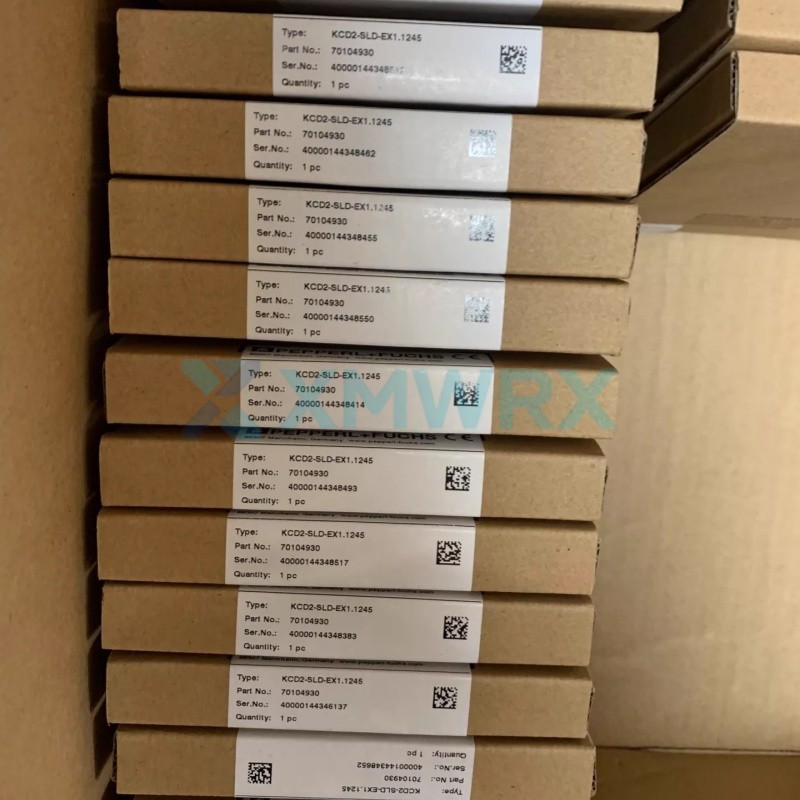
| Material Number (MNR) | 70104930 |
| Rated Voltage | 19 ... 30 V DC (loop powered) |
| Rated Current | 75 mA (at 24 V, 270 Ω load) |
| Power Dissipation | 1.3 W (at 24 V, 270 Ω load) |
| Functional Safety Rating | Up to SIL 3 |
| Case Dimensions | 12.5 mm (W) × 119 mm (H) × 114 mm (D) |
| Mounting Method | Standard 35 mm DIN rail mounting |
| Protection Rating | IP20 |
| Operating Temperature | -20 ... 60 °C |
| Wiring Method | Screw terminal blocks |
Q: What are the typical applications of this safety barrier?
A: Based on the core features of the KCD2-SLD-Ex1.1245 safety barrier (solenoid valve actuation, SIL 3 high safety level, circuit fault detection), its typical applications are mainly concentrated in the field of industrial automation control where there are extremely high requirements for explosion protection and functional safety.
Q: What precautions should be taken when installing and wiring this safety barrier?
A: Due to the complex environment of industrial sites, it is strongly recommended that you refer to the wiring diagram provided on the label on the product casing or in the official instruction manual when making specific wiring decisions. If you have a wiring diagram that you would like me to interpret, please feel free to send it to me.
Q: How to perform functional testing and troubleshooting after installation?
A: It is strictly forbidden to use a megohmmeter (or megohmmeter) to directly measure the insulation resistance between any terminals of the safety barrier, as this will directly break down and damage the precision energy-limiting circuitry inside the safety barrier. If it is necessary to test the insulation of the system wiring, all wiring to the safety barrier must be disconnected first.
Safety barriers must always be installed in non-hazardous areas (safe areas). If the safety barrier body is found to be abnormally hot, has a burning smell, or has a damaged casing, do not attempt to disassemble or repair it yourself. Immediately disconnect the power and contact the manufacturer for replacement.
leave a message
Scan to Wechat :
Scan to WhatsApp :