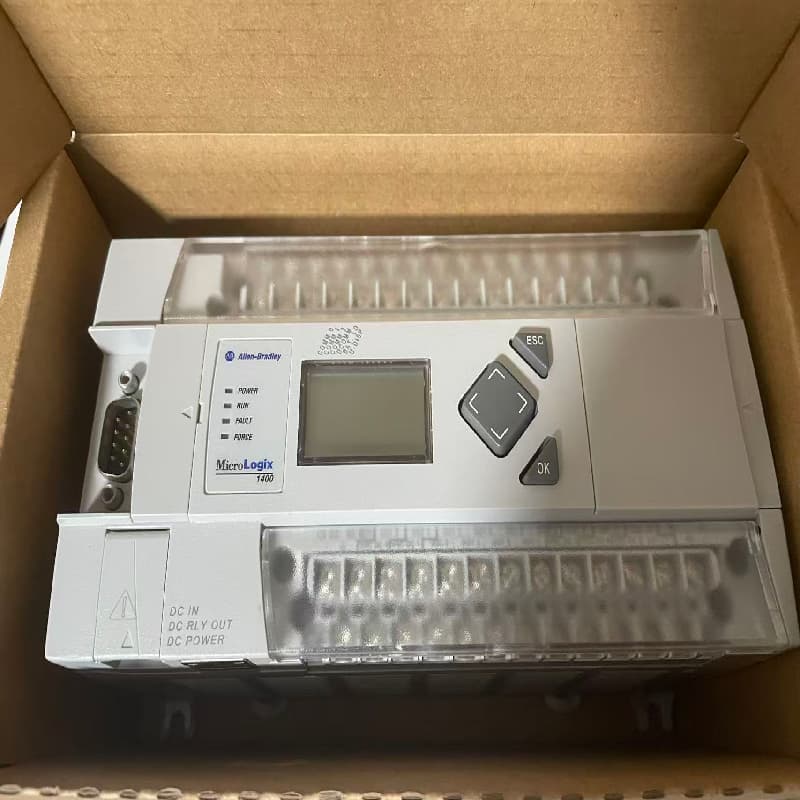
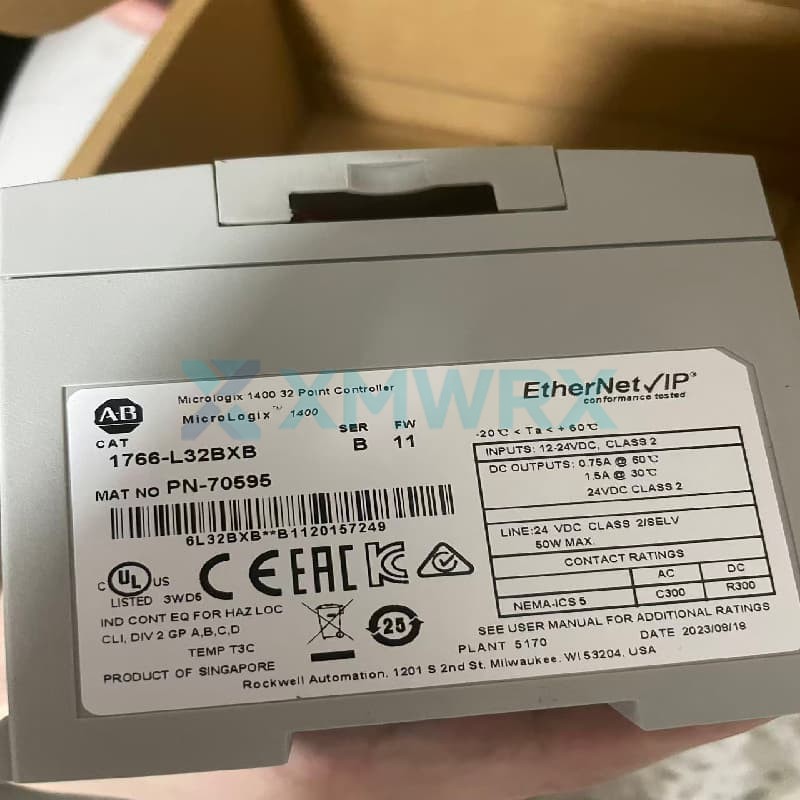
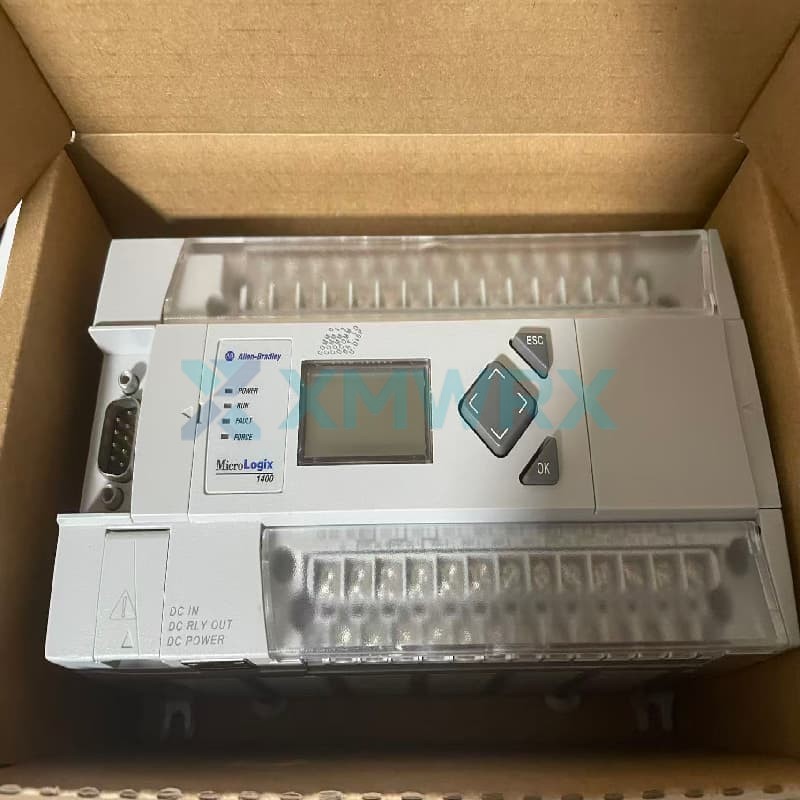
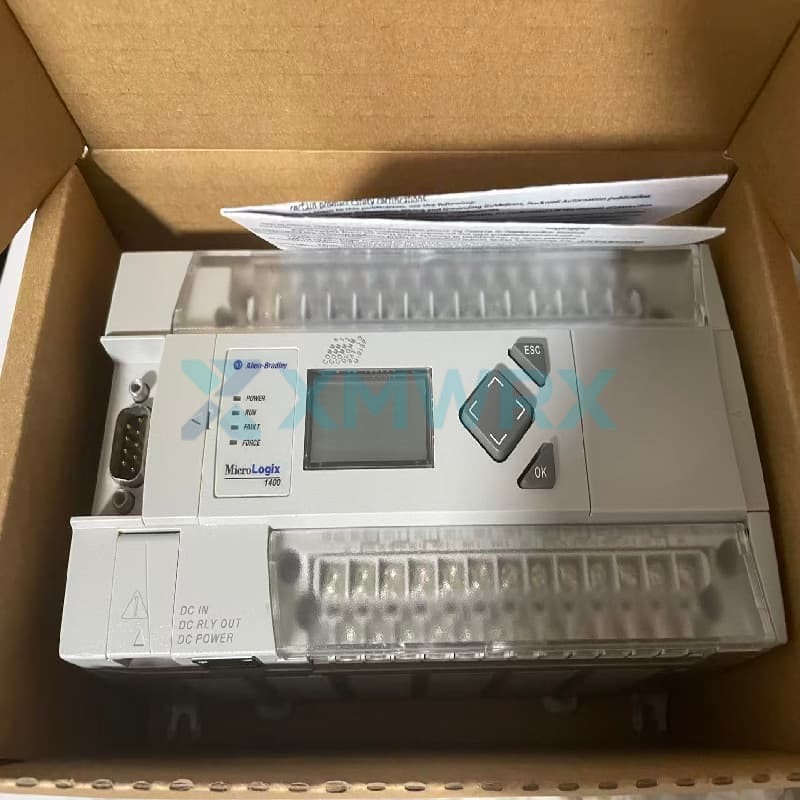
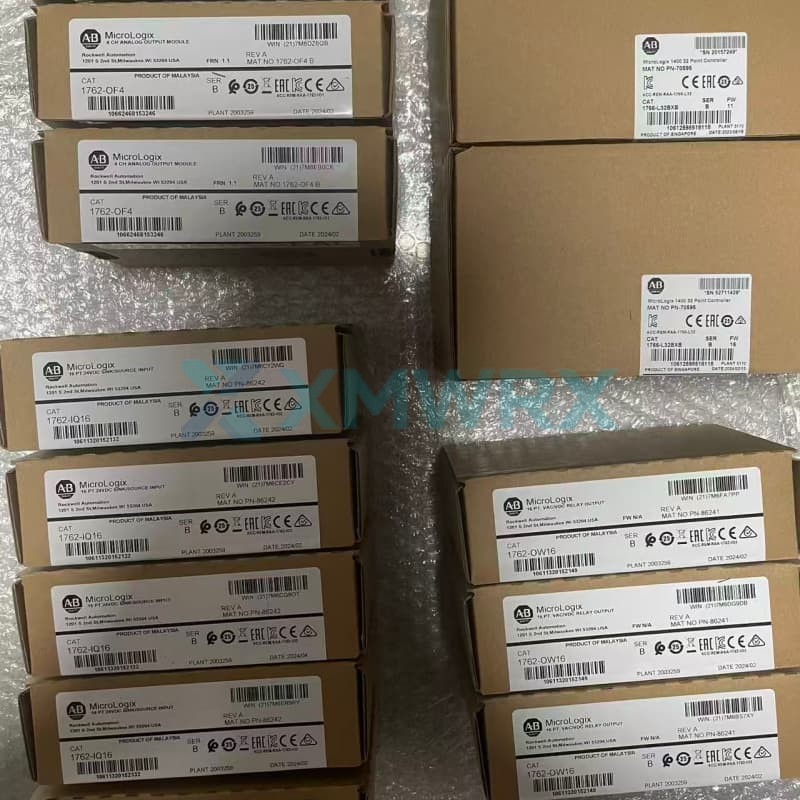
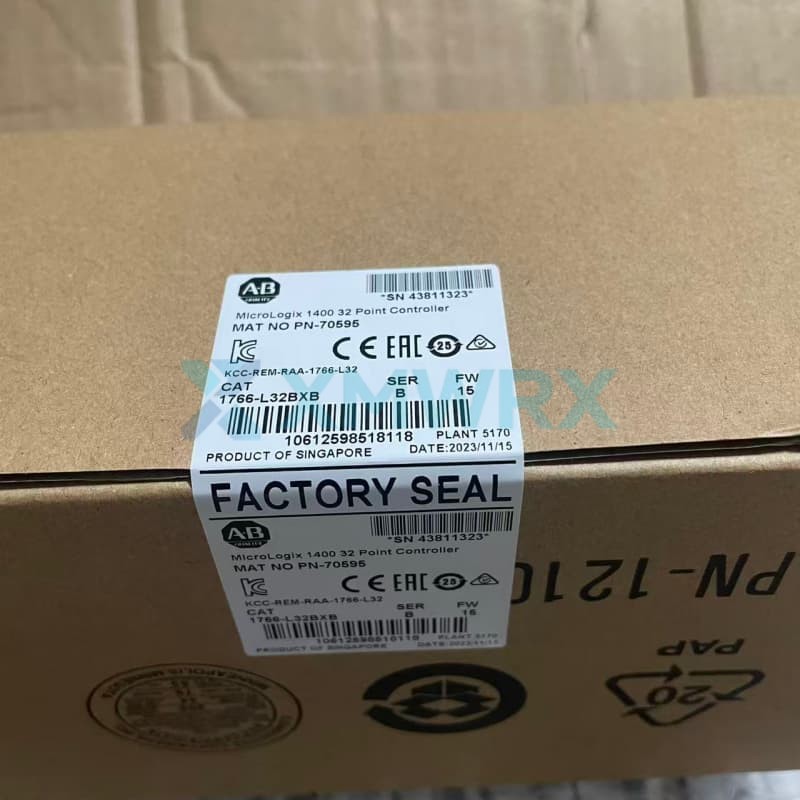
The 1766-L32BXB/B is a compact programmable logic controller (PLC) in Rockwell Automation's MicroLogix 1400 series.
It is designed for small to medium-sized applications requiring robust communication capabilities and high-density I/O. The controller features 20 digital inputs and 12 digital outputs, and integrates Ethernet and serial ports for easy connectivity and networking.
100% Original & Authentic In-Stock & Fast Shipping Expert Technical Support 12-Month Warranty
Core Features
- ✓ Integrated I/O: The unit features 20 digital inputs and 12 digital outputs (6 relays + 6 DC FET outputs) to meet basic control requirements.
- ✓ High-Speed Processing Capability: Supports up to 3 channels of 100 kHz high-speed counter inputs and 3 channels of high-speed outputs (suitable for PTO/PWM control), ideal for precise positioning and speed control applications.
- ✓ Powerful Communication Functions: Includes one EtherNet/IP port (supporting Modbus TCP) and two serial ports (supporting DF1, Modbus RTU, DH-485, etc.), facilitating integration with host computers, HMIs, and other devices.
- ✓ Data Storage and Web Services: Features data logging and recipe storage capabilities, and includes a built-in web server for remote status monitoring and email alarms via network.
Technical Specifications
| Brand |
Allen Bradley
|
| Model / Part Number |
1766-L32BXB/B |
| Product Series |
MicroLogix 1400 |
| User Memory |
10 KB (program) + 10 KB (data) |
| Digital Inputs |
20 points, 24V DC (12 of which are high-speed inputs) |
| Digital Outputs |
12 points (6 relays + 6 24V DC FETs) |
| High-Speed Outputs |
3 points, configurable to 100 kHz PTO or 40 kHz PWM |
| Communication Ports |
1 EtherNet/IP (RJ45), 2 RS-232 |
| Power Supply |
24V DC
|
| Dimensions (H x W x D) |
Approx. 87 x 180 x 90 mm |
| Operating Temperature |
-20 to 60 °C |
Frequently Asked Questions
Q: Can I use the 1766-L32BXB/B to drive a servo motor for positioning control?
A: Yes. The B version controller of this model provides three 100kHz high-speed outputs, which can be configured as Pulse Train Output (PTO). This allows it to send pulse and direction signals to servo drives (such as the Panasonic A5 series), thereby achieving speed and position control of the servo motor. You need to configure it using PTO-related instructions in programming software (such as RSLogix 500).
Q: Why does the relay output I use to control indicator lights fail so quickly?
A: Although relay outputs have a large current carrying capacity, their electrical life is limited, especially in applications with frequent switching (such as rapidly flashing indicator lights). The mechanical life of a relay can typically reach 20 million cycles, but under load switching conditions, the electrical life is significantly shortened depending on the load type and current magnitude. For indicator lights requiring high-frequency switching (e.g., twice per second), it is recommended to use the FET (transistor) type solid-state output on this controller, as its contactless and long-life characteristics are more suitable for such applications.
Q: What are the functional differences between the 1766-L32BXB/B and the earlier A version?
A: The most significant difference lies in the support for the Modbus TCP protocol. While the A version controller also has an Ethernet port, it does not support the Modbus TCP protocol and can only support Modbus RTU via the serial port. The B version, however, fully supports Modbus TCP/IP on the Ethernet port, which is crucial for applications requiring Modbus communication with third-party devices (such as power meters, frequency converters, etc.) via Ethernet.
Why Partner With Us?
100% Original
Genuine spare parts through rigorous supply chain control.
Quick Shipping
Expedited delivery through our global logistics network.
24/7 Support
Uninterrupted technical assistance for system installation.
Large Stock
Immediate availability from our massive control systems inventory.
leave a message
If you are interested in our products and want to know more details,please leave a message here,we will reply you as soon as we can.
 English





 IPv6 network supported